The euro, the pound, and other risk assets resumed declines against the U.S. dollar, and there were significant reasons for this.
Yesterday, the U.S. Federal Open Market Committee voted 8 to 4 to maintain the federal funds rate in the target range of 3.5%-3.75%. During the two-day meeting, committee members discussed a wide range of macroeconomic data, including the latest inflation, employment, and GDP figures. Despite some concerns regarding the recent acceleration in price growth, the majority concluded that the current monetary policy remains appropriately restrictive and is contributing to the slowdown in inflation toward the target level of 2%. However, three Federal Reserve members opposed including softer language about potential easing in future meetings, which became a catalyst for the dollar's rise. They insisted on the need to wait for more compelling evidence of sustained inflation reduction before considering a rate cut.
Today promises to be busy not only with business activity but also with important economic events that may significantly impact financial markets. The focus will be on key macroeconomic indicators from the European Union, which will be released in the morning. Specifically, data on changes in the volume of the eurozone's gross domestic product for the first quarter of this year are expected to be published. These figures will give an idea of the dynamics of the region's economic activity, reflecting both production and consumer trends.
In addition to the GDP data, traders will closely monitor the consumer price index release in the eurozone. The change in the CPI is a critically important indicator of the inflation rate, which, in turn, serves as the main guideline for the central bank. High inflation may push the European Central Bank to a tougher stance.
All these macroeconomic data are directly related to today's ECB decision on the main interest rate. Economists agree that rates will remain unchanged, and the release of strong GDP data, moderate inflation, and a stable labor market may strengthen the case for the ECB's position.
As for the pound, traders' attention will be focused on the Bank of England's interest rate decision this morning. Any change—or even a decision to keep rates at their current level—could trigger significant volatility in the currency market. Economists expect the BoE to most likely keep rates unchanged, given the current global geopolitical situation and high inflation in the UK. The monetary policy statement, which will follow the rate announcement, will provide a more detailed picture of the central bank's thinking.
If the data aligns with economists' expectations, it would be prudent to act in line with the Mean Reversion strategy. If the data significantly exceeds or falls short of economists' expectations, it would be best to employ the Momentum strategy.
Momentum Strategy (Breakout):
For the EUR/USD Pair
- Buy on a breakout of the level 1.1675, which may lead to a rise in the euro towards 1.1699 and 1.1725.
- Sell on a breakout of the level 1.1655, which may lead to a decline in the euro towards 1.1627 and 1.1600.
For the GBP/USD Pair
- Buy on a breakout of the level 1.3469, which may lead to a rise in the pound towards 1.3492 and 1.3525.
- Sell on a breakout of the level 1.3446, which may lead to a decline in the pound towards 1.3416 and 1.3381.
For the USD/JPY Pair
- Buy on a breakout of the level 160.72, which may lead to a rise in the dollar towards 160.91 and 161.10.
- Sell on a breakout of the level 160.50, which may lead to a sell-off of the dollar towards 160.25 and 159.99.
Mean Reversion Strategy (Return):
For the EUR/USD Pair
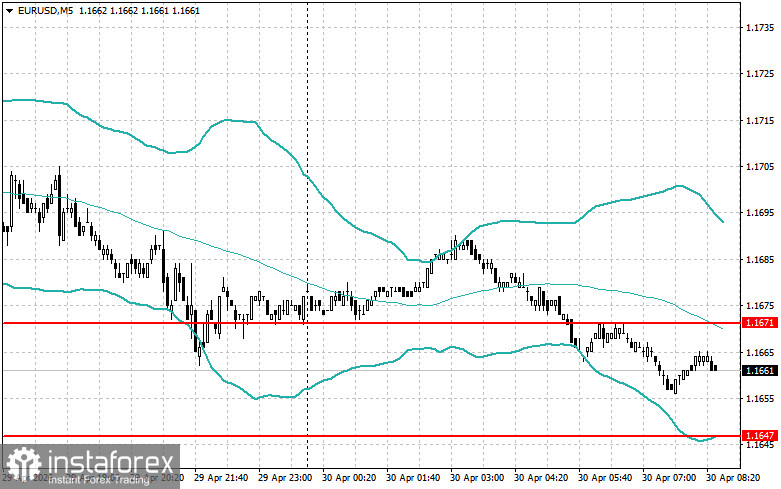
- Look for short positions after a failed breakout above 1.1671 upon a return below that level.
- Look for long positions after a failed breakout below 1.1647 upon a return to that level.
For the GBP/USD Pair
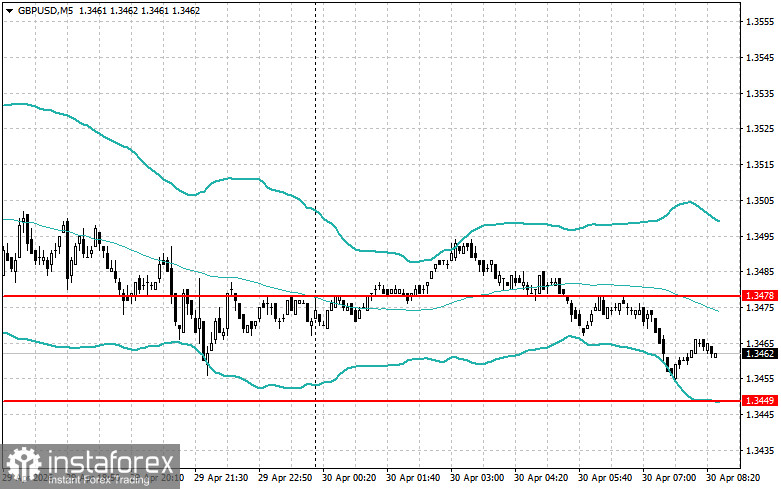
- Look for shorts after a failed breakout above 1.3478 upon a return below that level.
- Look for longs after a failed breakout below 1.3449 upon a return to that level.
For the AUD/USD Pair
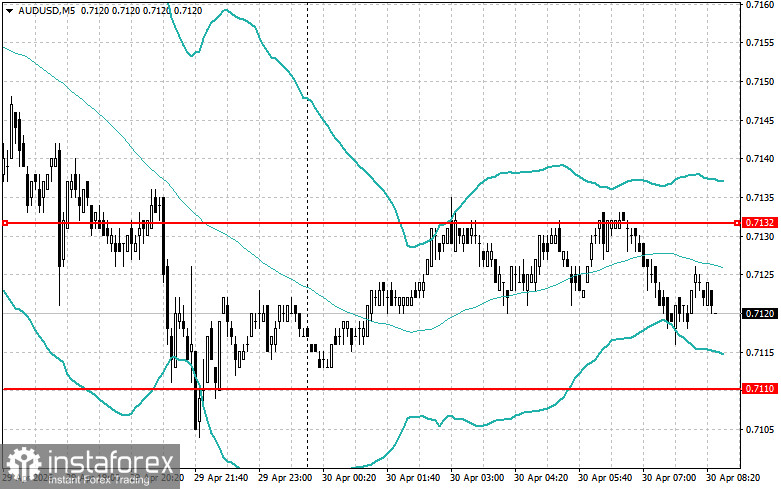
- Look for shorts after a failed breakout above 0.7132 upon a return below that level.
- Look for longs after a failed breakout below 0.7110 upon a return to that level.
For the USD/CAD Pair
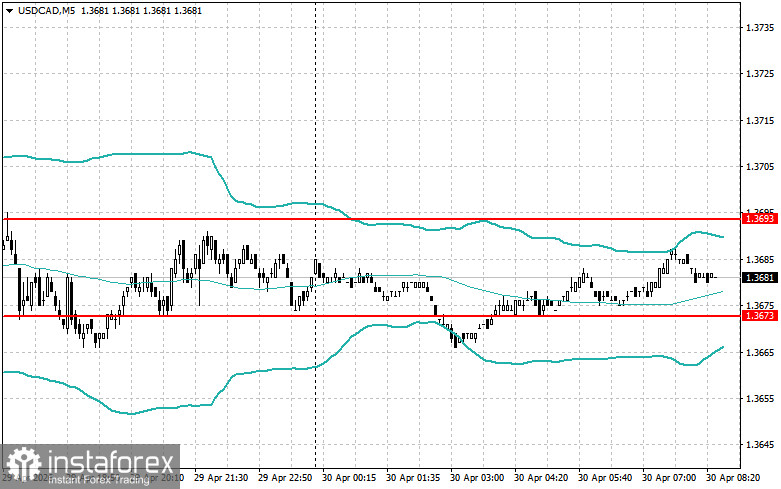
- Look for shorts after a failed breakout above 1.3693 upon a return below that level.
- Look for longs after a failed breakout below 1.3673 upon a return to that level.